North America: +1 (833) 382 1008 »
Navigation

North America

+1 (833) 382 1008

Australia

+1 (800) 431 568

By Kate Park, Marketing Manager, Blackpurl · Updated September 16, 2026

TL;DR: Blackpurl spent three days at NATDA 2026 in Nashville (Booth 1624, the Tech Lounge) talking with trailer dealers and partners about how the industry is shifting and what they now expect from the software running their business. Dealers want a DMS that keeps pace with growth and doesn’t hold them back. Here’s what we heard and what we showed.

Two weeks after Nashville, and I’m still finding hats and flyers in my luggage.

I could write the usual recap. Booth traffic, new features, book a demo. Some of that is here, because we do have a product to talk about and I’d be lying if I said we weren’t there to sell it. But the conversations at the Tech Lounge kept circling one idea: dealers expect more from their software than they did even three years ago. So I’m writing this the way I’d write it to a peer or business partner of mine. Here’s what happened, and here’s what we think has changed.

Who was at Booth 1624, the Blackpurl Tech Lounge?

Blackpurl—we’re a dedicated team of sharp, grounded folks committed to helping dealers grow their businesses. 

We’re the people behind the screen of the Blackpurl brand, the people who set the booth up, and the people who pick up the phone when something goes wrong. 

Here’s what you should know about us, in case you didn’t get a chance to stop by. We care about making things work. We hold each other to that, sometimes loudly. We’re here because we want the dealers who use our system to run their business better. 

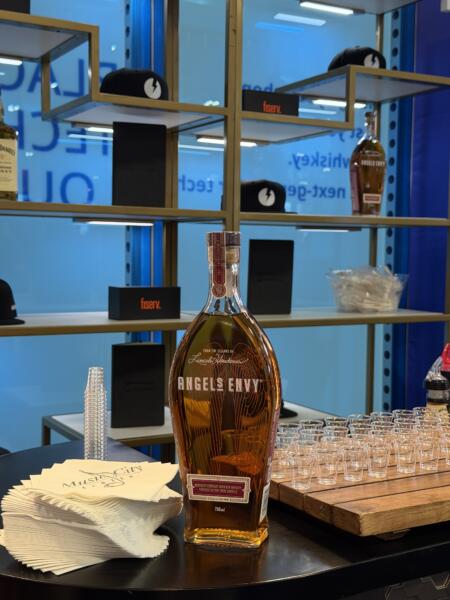
We also enjoy a whiskey and a good conversation, which is why the booth was called the Tech Lounge. We’ll talk to anyone. Unless you’re boring. But if you’ve got an opinion about anything in life, you’ll enjoy the small talk, and you’ll probably learn something. So will we.

We’ve been at NATDA for a few years, and we want to take this opportunity to thank the NATDA team, who have watched us grow the whole way and supported our partnership.

IMG_1476

How is the trailer industry changing?

Faster than we think.

A few years ago, the conversations on the floor were about operational depth. What’s the cheapest tool that does the job? What’s the easiest to run? Is the margin on this unit actually worth it? How do I track parts, service, and floor plan without a spreadsheet for each? Am I making enough? Tariffs. Those questions haven’t gone anywhere, and they shouldn’t. Every business wants to do well, take care of the people in the shop, and give customers a better experience than the store down the road.

What changed this year is what dealers asked on top of that. Most of the people who stopped by the Blackpurl Tech Lounge had already adopted AI tools somewhere in their business. They knew which one they used for which part of the process, and they’d already worked out what was worth paying for and what wasn’t. The question wasn’t “is this real.” It was “what’s in it for me if I invest further, and what should I expect a software company to head next, and does that align with my business direction.”

That’s a different market than the one we exhibited into three years ago. The conversation has moved from efficiency to complexity: how many integrated tools do I actually need, how do they talk to each other, and does the platform I’m running on have a direction that matches mine. Even getting a standardized data format across the network, which came up more than once, is really a question about how much of the industry’s plumbing dealers should have to manage themselves.

Why does standardized data matter for the trailer industry?

Because right now we’re all different pieces of a puzzle that were cut from different boxes.

A manufacturer describes a trailer one way. The next manufacturer describes the same class of unit another way. A dealer carrying both retypes the spec sheet twice, reconciles three versions of the same VIN, and then wonders why the website inventory doesn’t match the DMS. Multiply that across every OEM line, every dealer, every vendor trying to integrate, and you get an industry that spends an enormous amount of effort just agreeing on what a trailer is.

Once there’s a standardized format, that effort disappears. Connectivity gets easier because integrators build once instead of once per brand. Adoption gets easier because a dealer switching or adding a tool isn’t starting from a blank spreadsheet. Data flows from the factory to the dealer to the end customer without being retyped along the way, and everyone in that chain, vendors, partners, manufacturers, dealers, gets more value from the tools they’ve already paid for.

This isn’t about competition. It’s a frustration the industry has carried for a long time, and this year really felt like the moment people stopped describing the gap and started acting on it.

What did the Trailer Industry Council do in Nashville?

The Blackpurl Trailer Industry Council met in person at the Tech Lounge during the show. We host the space and the time; the work belongs to the dealers, manufacturers, and partners who show up and participate in it.

The Trailer Data Standard is an effort to get OEM unit data into the same format, so a dealer isn’t retyping spec sheets brand by brand or reconciling three versions of the same trailer. It sounds unglamorous. It’s the kind of plumbing that decides how much of the industry’s complexity lands on a dealer’s desk, which is exactly what people were asking about all week.

The Nashville meeting was about next steps: how to help the industry adopt the standard, how to open it up beyond the room it started in, and how to pass it on to others for visibility and engagement so this doesn’t stay a conversation among the people who already agree. Progress on something like this comes from people who collaborate, agreeing to move the industry forward in the same direction. If you want to be part of it, trailerdatastandards.org is where to start.

What did Blackpurl show at NATDA 2026?

Blackpurl 2, and specifically the new selling and quoting experience. Dealers leaned in on that one because it’s the part of the day they can feel. A quote that used to mean three screens and a calculator becomes one.

Our main highlights of this year were Intelligence and Customer Engagement. Intelligence means your numbers live in one place and you can see them without exporting to a spreadsheet: margin by unit, aging inventory, open work orders, what’s owed. Customer Engagement means staying connected to the customer between the sale and the next one, through Blackpurl Messenger, a built-in texting capability for Blackpurl dealers. Blackpurl 2 is cloud-native, runs parts, service, sales, and accounting in one system, and connects to OEMs and partners through Trailer Connect Program.

What we heard in Nashville is that dealers don’t need their DMS to be another AI tool. They need it to be the system the rest of their tools can trust.

If you’d like to see it with your own dealership in mind, book a live demo here

NATDA Closing Image-selection

Thank you, Nashville.

To every dealer who stopped by, told us what’s working and what isn’t, and shared strong opinions on whiskey: thank you. If we haven’t followed up yet, we will. If you’d rather not wait, book a demo and we’ll pick the conversation back up.

See you next year!


Frequently asked questions

What is NATDA?

NATDA is the North American Trailer Dealers Association, and its annual trade show brings together trailer dealers, manufacturers, suppliers, and service providers. The 2026 show ran September 1 to 3 at Music City Center in Nashville. Dealers attend to see new units, meet OEMs, and evaluate the tools they run their business on, including dealership management systems.

Was Blackpurl at NATDA 2026?

Yes. Blackpurl exhibited at Booth 1624, the Blackpurl Tech Lounge, with team members from sales, product, marketing, and customer success. The team demoed new Blackpurl 2 features, including the new selling experience and the Trailer Connect Program.

How is the trailer industry changing in 2026?

The conversation has shifted from operational efficiency to complexity. Dealers have already adopted a range of specialized tools, including AI, and the challenge is now keeping them connected and choosing platforms whose direction matches their own. Manufacturer consolidation, inconsistent OEM data, and buyers who research inventory online before visiting are all raising expectations of the software underneath.

What is a dealership management system for trailer dealers?

A dealership management system (DMS) is the software a trailer dealership uses to run sales, parts, service, inventory, and accounting in one place. A DMS built for trailer dealers handles unit-specific needs such as VIN and spec data from multiple OEMs, floor plan management, and quoting that combines units, parts, and labor.

Who can participate in the Trailer Data Standard?

Anyone with a stake in trailer unit data: dealers, manufacturers, distributors, software vendors, associations, and marketplaces. Participation isn’t limited to any one company or affiliation. The Blackpurl Trailer Industry Council is the working group behind it, and trailerdatastandards.org is where to learn more or get involved.

What is Blackpurl 2?

Blackpurl 2 is the next-gen dealership management system built for trailer, powersports, RV, golf car, and equipment dealers. It runs parts, service, sales, and accounting in one system, so the unit, the customer, the work order, and the books are always in agreement. With its new Intelligence and Customer Engagement capabilities, dealers can work smarter, sell faster, and focus on growing.

Is Blackpurl 2 cloud-based?

Yes. Blackpurl 2 runs in the cloud, so there’s no server in the back office and no on-site upgrade cycle. Updates arrive on a regular release schedule without re-implementation, and the team can log in from the shop floor, the lot, a second location, or a phone.

Have another question?

More to explore

Sep. 15, 2026

Golf cars stopped being just golf cars years ago — they're street-legal EVs, fleet contracts, and six-figure parts departments. Yet most dealers still run the back office on spreadsheets. Here's why 2026 is the year to switch, and what to look for in software built for golf cart dealerships.

Aug. 19, 2026

How golf car dealers can win on customer experience with e-commerce, synced inventory, and marketing that actually works. Article 1 in a series on digital marketing for golf car dealerships.